DDD Lab at Etmaal 2025

Our research will be well represented at this years’ Etmaal in Bruges. See here for an overview of the panels we are featured in. Looking forward to meeting our Dutch and Flemish communication science colleagues. See you there! 👋

Monday, 3rd of February 2025

Political Communication – Misinformation and Trust – 14:20-15:20

Lotte Schrijver, Rens Vliegenthart, and Sanne Tamboer: Misinformation during crises: the spread of misinformation and its societal roots during the covid pandemic )

Alice Hamilton, Rens Vliegenthart, Sophie Boerman, and Annelien van Remoortere: Examining Political Trust during the 2024 European Elections: The Role of Disinformation and Ideological Congruence

Political Communication – Cognitive and Emotional Drivers of Political Engagement – 14:20 – 15:20

Emily Gravesteijn, Lina Buttgereit, and Emma Turkenburg: Blaming the Messenger? How politicians’ media bias accusations shape citizens’ bias perceptions and attitudes towards the accuser

Political Communication – Political Campaigning Dynamics – 15:30-16:30

Edwin Jans, Emma Turkenburg, Rens Vliegenthart, and Sanne Kruikemeier: Affective Polarization in Elections: The Role of Vote Certainty and Its Impact

Puck Guldemond, Sophie Boerman, Susan Vermeer, and Sanne Kruikemeier: Through Voters’ Eyes: An Eye-tracking Study Examining if Political Advertisements Attract Attention

Media and Well-Being – Social Media, Body Image, and Sexuality: Insights into Youth Experiences – 15:30-16:30

Ini Vanwesenbeeck, Anne-Mette Hermans, Sophie Boerman, and Emmelyn Croes: Filtering Reality: Social media usage, body image, and self-esteem in diverse primary school children

Political Communication – Ads and Political Campaigning – 17:00-18:00

Jade Vrielink, Annelien van Remoortere, Rens Vliegenthart, and Sanne Kruikemeier: Non-stop digital advertising: the moderating roles of advertising frequency and personalization on the impact of political attack ads

Political Communication – News, Perceptions, and Participation – 17:00-18:00

Svenja Schäfer, Sanne Tamboer, Sanne Kruikemeier, Alice Hamilton, Annelien van Remoortere, and Susan Vermeer: Is Europe Tuning Out? News Avoidance Across 15 Countries in the European Parliament Elections

Xiaoyang Zhao, Mark Boukes, Rens Vliegenthart, and Knut De Swert: Triple spirals? Investigating the longitudinal dynamics of news exposure, issue knowledge, and public perceptions of EU–China trade relations in the Netherlands

Wies Ruyters, Rens Vliegenthart, Sanne Kruikemeier, and Susan Vermeer: Beyond Words: How Multi-Modal Media Prominence Drives Political Recognition and Party Support

Media and Well-Being – Poster Session – 17:00-18:00

*Ximena Lainfiesta and Bob Mulder: From Hashtags to Healthcare: Exploring TikTok’s Influence on the Self-Management Practices of Women with PCOS

Tuesday, 4th of February 2025

Environmental Communication – Sustainability and Fashion – 09:15-10:15

Roseline van Gogh, Heleen Dekoninck, and Sophie Boerman: Are they able to sustain? A multiple-exposure experiment studying differential effects of TikTok greenfluencers on young adults’ sustainable fashion choices

Science Communication – Science Communication in Organizations and Society – 10:25-11:25

Denise Roth, Svenja Schäfer, Sanne Kruikemeier, and Rens Vliegenthart: Science and Society in a Polarized World: Understanding Public Perceptions Amid Politicization

Erik van Sebille, Celine Weel, Anna Leerink, Daan Reijnders, Rens Vliegenthart, and Mark Bos: Does personalisation and activism in writing by climate scientists on KlimaatHelpdesk.org affect their credibility?

Persuasive Communication – Algorithmic Persuasion and Surveillance – 10:25-11:25

Dong Zhang, Joanna Strycharz, Sophie Boerman, Theo Araujo, and Hilde Voorveld: Who’s watching me? Identifying triggers and consequences of perceived surveillance in digital data-driven advertising
ERC/DDD Lab Workshop on Political Microtargeting

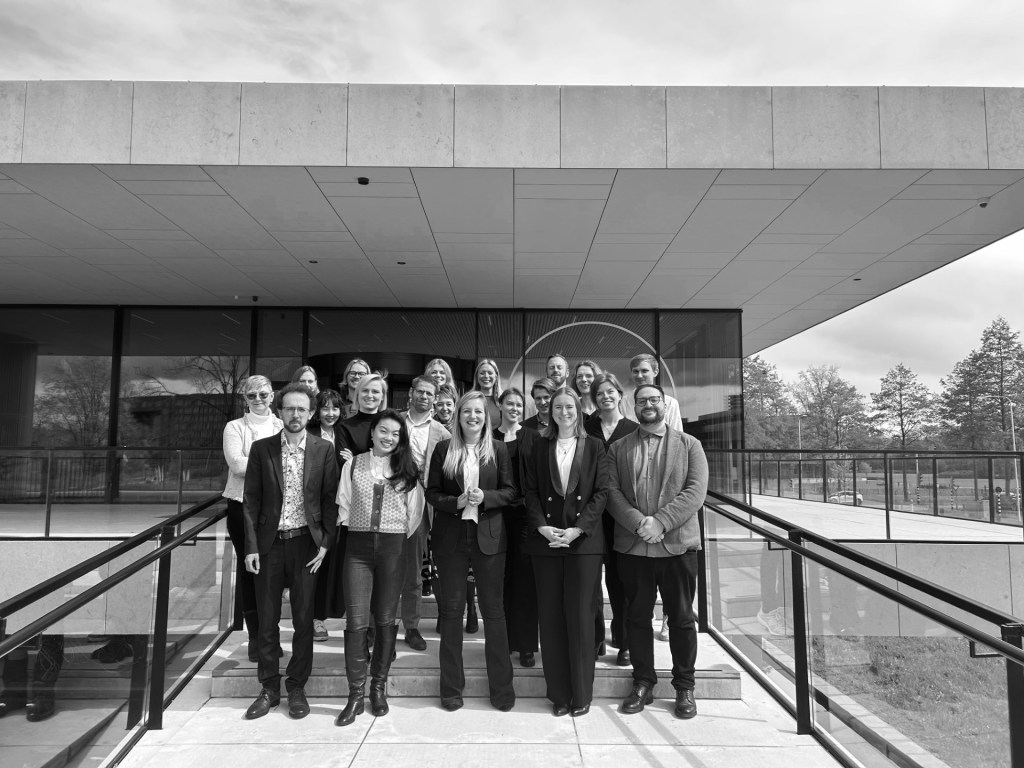
On the 17th and 18th of April 2024, we organized a two-day ERC/DDD Lab Workshop at Wageningen University on Political Microtargeting, as part of our ERC-funded project “Hunting for Voters”. In this project, we study the effects of data-driven political microtargeting to identify under which conditions and to what extent they affect citizens’ attitudes, opinions and voting decisions. Since the project is almost halfway through, we gathered a diverse group of scientists passionate about understanding the impact and workings of political microtargeting. We’ve enjoyed interesting and thought-provoking keynotes of esteemed speakers, including Prof. Dr. Kate Dommett, Prof. Dr. Rachel Gibson, dr. Simon Kruschinski, dr. Mathieu Lavigne, prof. dr. Jennifer Stromer-Galley and prof. dr. Young Mie Kim. Furthermore, we had the opportunity to showcase our ongoing work within the ERC project, fostering collaboration and exchange of ideas within the scientific community. A heartfelt thanks to all who contributed to making our workshop a success. Stay tuned for updates on future events and research plans as we continue to develop and advance our research in the field of political microtargeting.

Guest lecture Stephan Lewandowsky: From alternative conceptions of honesty to alternative facts

On Tuesday the 31st of October Prof. Stephan Lewandowsky from the University of Bristol (UK) visited our research group to give a lecture in the ‘Digital Matters’ series about mis- and disinformation, entitled ‘When liars are considered honest: From alternative conceptions of honesty to alternative facts in communications by American politicians’.

Stephan Lewandowsky is an esteemed professor in Cognitive Psychology, who has won many awards, including a Royal Society Wolfson Research Merit Award, for his work on memory, decision-making, and knowledge. His current work focuses on the persistence of mis- and disinformation in society, particularly on scientific issues such as climate change, and how we can reduce belief in misinformation. 

In his lecture, Lewandowsky explained how so-called belief-speaking has increased in American political communication over the last years. When politicians engage in belief-speaking, they rely on common sense, intuition and feelings rather than facts and evidence to communicate their ideas. The public may see politicians who engage in belief-speaking as sincere, even if their claims are not backed up by facts. In his research, Lewandowsky shows that belief-speaking can be a gateway for sharing low-quality information. This can help us understand why politicians who share disinformation may still be considered honest by the public.

It was an honor to host Stephan Lewandowsky’s lecture and to welcome him to our research group. We want to thank Stephan Lewandowsky for his interesting insights and look forward to seeing more from his research project.  

NORFACE Project Meeting in Manchester

From Wednesday the 11th until Friday the 13th of October, members of the DDD Lab Sanne Kruikemeier, Xiaotong Chu and Annelien van Remoortere went to Manchester for a project meeting of the NORFACE Data-driven project.

On Thursday, we had a day full of project meetings. We started the day with updates from the different work packages and had a review of the delivery on the project. This turned out to be very fun as we managed to deliver on almost all of the promises made in the project proposal. Next, different members of the team presented papers they were working on. We ended the day with a very interesting keynote delivered by Chris Jones, Head of Data at the Scottish National Party. Chris focused on his experiences with working on data and analytics within the SNP, about the kind of data and analytics used by the party and the way data is used to inform decision making.

On Friday, the Data Driven Campaigning group organized a workshop on ‘Data-Driven Campaigning in a Comparative Context: Toward a 4th Era of Political Communication?’ where external researchers were invited to present their work. There were multiple sessions, including one that focused on voter perspectives on data driven campaigns, a session about multi-level data driven campaigns and a session that focused on the role of parties and platforms in data driven campaigning.

In short, it was a very interesting project meeting and workshop that gave us new insights in data driven campaigning and made us connect with researchers that work on the topic.

Want to know more about the NORFACE project? Check Twitter or the website

Guest Lecture Severin-Nielsen: Between traditional and social media

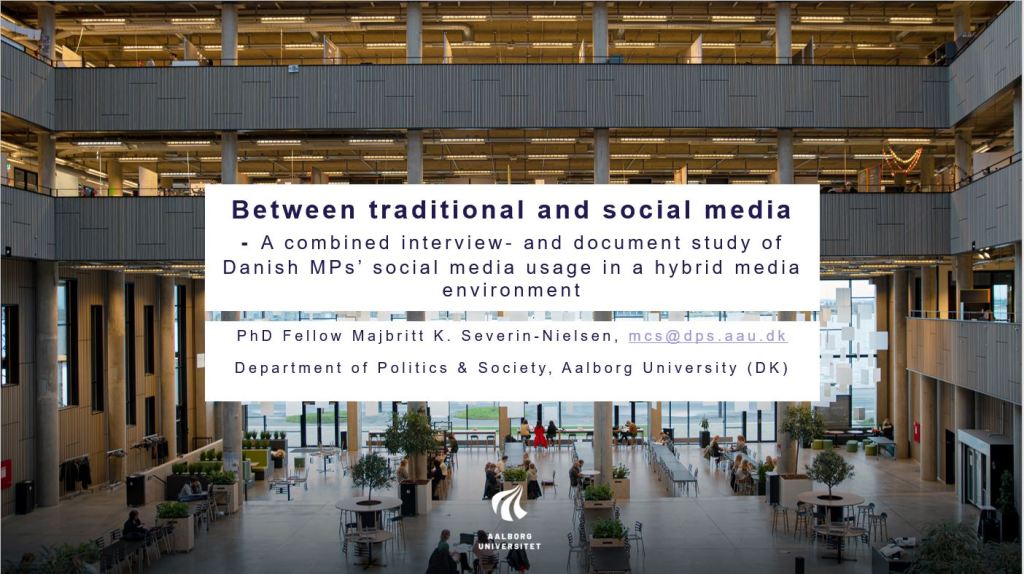
On Monday the 9th of October Majbritt K. Severin-Nielsen, visiting scholar from Aalborg University (DK) gave a guest lecture to the department on her PhD research: between traditional and social media on traditional and social media usage of Danish MPs.

In her PhD research, Severin-Nielsen examines politicians’ social media usage contextualized with their broader communication practices and political work. There are many ’black and white’ assumptions about social media in Danish society. For example, the image of politicians only using social media to bypass critical questions from journalists. The goal of Majbritts’ research is to understand how Danish members of parliament navigate social media within current hybrid media system and how it impacts them.

Her findings nuance some of the common assumptions there are about social media. Politicians cannot simply bypass journalists without consequences, because this would harm their image, as people would be aware of this. In addition, where people assume politicians have a well-thought out social media strategy, this often is not the case. More often they just ”do something”, as they do not have time and thus are not as strategic as people often assume. The findings also point out that social media facilitates a continuous dialogue between politicians & citizens, which extends to the offline world.

It was a pleasure to host Severin-Nielsen’s research visit to Wageningen and we are thankful for her introducing us to her interesting research.

Want to know more? Reach out to her through Twitter or email.

Inaugural Lecture Prof. Dr. Kruikemeier and Prof. Dr. Vliegenthart

On the 15th of June, Prof. dr. Sanne Kruikemeier (Professor of Digital Media and Society) and Prof. dr. Rens Vliegenthart (Professor of Strategic Communication) will give their inaugural lecture, entitled (Social) media: binding or blinding? On digitalisation and polarisation in a life science context. The lecture will take place in the Omnia building at Wageningen University & Research.

DDD-lab @ ICA 2023 Toronto

Members of the DDD-lab are well represented at this years annual ICA meeting in Toronto. Here is an overview of what we will be presenting. See you there!

Wednesday, May 24, 2023

  • Preconference “Comparative Digital Political Communication: Comparisons across Countries, Platforms, and Time”; Toronto Metropolitan University; Jade Vrielink, Sanne Kruikemeier

Thursday, May 25, 2023

  • Preconference “Political Communication PhD Student Preconference”; Toronto Metropolitan University; Participants: Jade Vrielink, Lotte Schrijver, Emma van der Goot, Puck Guldemond; Discussants: Sanne Kruikemeier, Rens Vliegenthart
  • Preconference “News Avoidance, Resistance, and Related Audience Practices: Definitions, Predictors, and Consequences”; Maple East + West (Sheraton); Kiki de Bruin, Rens Vliegenthart

Friday, May 26, 2023

  • 9:00 AM – 10:15 AM; M – York (Sheraton); SNapp: A Tailored Smartphone App Intervention to Promote Walking in Adults of Low Socioeconomic Position; Anne L. Vos, Gert-Jan de Bruijn, Michel C. Klein, Jeroen Lakerveld, Sophie C. Boerman, Edith G. Smit

Saturday, May 27, 2023

  • 10:30 AM – 11:45 AM; 2 – Simcoe (Sheraton); Politically Knowledgeable or Directional (Mis)Believers?; Elina Lindgren, Isabella Glogger, Nora Theorin, Torun Lindholm, Jesper Stromback, Hajo Boomgaarden, Alyt Damstra, Yariv Tsfati, Rens Vliegenthart
  • 12:00 PM – 1:15 PM; M – Maple West (Sheraton); Co-Creating Effective Influencer Marketing Disclosures With Children; Eva A. Van Reijmersdal, Sophie C. Boerman
  • 3:00 PM – 4:15 PM @ Cedar (Sheraton); Google as Journalists’ Invisible Research Assistant? The Impact of Algorithmically-Driven Search Results in Journalistic Information; Yael de Haan, Nele Goutier, Sanne Kruikemeier, Sophie Lecheler

Sunday, May 28, 2023

  • 12:00 PM – 1:15 PM; Poster Presentation @ LC – Sheraton Hall Exhibit Hall area (Sheraton); Do Politicians Knowingly Create Conflict for More Media Attention?;
    Emma S. van der Goot; Toni van der Meer; Michael Hameleers; Rens Vliegenthart
  • 12:00 PM – 1:15 PM; M – Chestnut East (Sheraton); On or Off Topic? Understanding the Effects of Issue-Related Political Targeted Ads; Xiaotong Chu, Lukas P. Otto, Rens Vliegenthart, Sophie Lecheler, Claes d. Vreese, Sanne Kruikemeier
  • 12:00 PM – 1:15 PM; M – Chestnut East (Sheraton); Say Cheese! Understanding the Effects of Happiness in Online Political Ads; Rens Vliegenthart, Xiaotong Chu, Annelien Van Remoortere, Susan Vermeer, Sanne Kruikemeier
  • 12:00 PM – 1:15 PM; 4 – Yorkville West (Sheraton); Political Opinion Leaders in an Age of Misinformation: Are They More Informed Than Others?; Jesper Stromback, Elina Lindgren, Alyt Damstra, Rens Vliegenthart, Yariv Tsfati, Hajo Boomgaarden, Elena Broda, Noëlle S. Lebernegg, Sebastian Galyga
  • 1:30 PM – 2:45 PM; 4 – Yorkville West (Sheraton); Understanding Digital Campaign Competence: Conceptualizing Data-Driven Political Advertising Literacy; Sophie Minihold, Sophie Lecheler, Rachel Gibson, Claes d. Vreese, Sanne Kruikemeier
  • 3:00 PM – 4:15 PM; 2 – Dominion South (Sheraton); What is News to You? Investigating Individual News Diets on YouTube Through Data Donation; Zilin Lin, Felicia Loecherbach, Damian Trilling, Susan Vermeer, Kasper Welbers

Monday, May 29, 2023

  • 9:00 AM – 10:15 AM; 4 – Yorkville West (Sheraton); Contact Us! An Audit Study to Examine the Responsiveness of Political Elites on Social Media; Annelien Van Remoortere, Susan Vermeer, Sanne Kruikemeier
  • 9:00 AM – 10:15 AM; 2 – Provincial South (Sheraton); Distant Political News Classification: Facilitating Machine Learning Identification of Political News Across Multilingual Corpora; Ernesto de León, Susan Vermeer
  • 12:00 PM – 1:15 PM; LC – Osgoode West (Sheraton); Increasing Digital Campaign Competence; Sophie Minihold, Sophie Lecheler, Claes d. Vreese, Sanne Kruikemeier

Professor Rens Vliegenthart receives Vici grant

Professor Rens Vliegenthart, Strategic Communication Chair Holder at the Department of Social Sciences at Wageningen University & Research has been awarded a Vici grant for his research project entitled The mobilisation of political dissatisfaction: causes, content and consequences.

The €1.5 million grant will enable him to conduct further research and extend his research group. Vliegenthart plans to use this grant to explore how politicians and political parties use discontent and polarisation to achieve their goals. To what extent do they deploy the language of discontent, and how does this affect electoral support and trust? And does this kind of communication also influence political decision-making?

Here is what Vliegenthart has to say about it: “I’m incredibly happy with this grant. The application process took almost a year. I’m very much looking forward to doing this research. The subject matter is seamlessly attuned to our times. We live in an era of digitalisation and polarisation. In the Netherlands, we have this basic assumption that there are lots of angry citizens. My question is: How do politicians use this anger and discontent and deploy it in what I call ‘discontent framing’? How common is this kind of framing, and in what area is it used? Is it only populist parties that deploy this kind of communication, or is it mainstream and do parties like PvdA (Labour Party) or VVD (People’s Party for Freedom and Democracy) also use it as a tool? How does discontent framing affect public opinion, our voting preferences and policy processes?”

Climate change, Covid and immigration

Vliegenthart wants to move beyond clichés and assumptions. His heart lies with empirical research: “I’m interested in this precise form of communication: How does it really work?” The assumptions that are currently going around are precisely what triggers him: “There is this widespread belief that angry citizens are responsible for polarisation, but is that really true? Is this polarisation real? I want to measure all this myself. There are indications that the situation is not as dire as we might think. People keep saying that the Netherlands is pretty much on fire because of discontent, but is that really the case? I plan to do content analysis, analyse images and photographs, use existing opinion polls and set out new ones myself. Anything to expose the mechanisms behind the assumptions. In this context, I focus on topics such as climate change, the COVID-19 pandemic and immigration. These are typically issues around which polarisation can arise and that can be used by politicians.”

Disinformation

You might be tempted to think that politicians are not really deploying this sense of discontent on purpose. But that is one thing Vliegenthart is sure of: “I’m now at a point where I can go so far as to say that a lot of communication by politicians is strategically driven. It is deliberate, as shown by much of the existing research. But how is it done, through what media and what is the effect? That is what I want to find out. Ultimately, I hope that this research will contribute to people becoming aware of how these kinds of processes unfold and becoming more critical. This knowledge can be used in secondary schools, for example, to teach young people what misinformation and disinformation are, and how polarisation arises.”

There are still many open questions to be answered says Vliegenthart: “For example, framing in itself is not a bad thing. We all look at the world from our own perspective and communicate a limited interpretation of reality. But I’m talking about discontent framing, using discontent in your communication. In some cases, this may involve the use of disinformation. At the same time, accusing someone of disinformation is also a phenomenon worth studying. Where does it come from? And why is it also so common these days? Another thing we don’t actually know yet is how effective this type of communication is: When does it work, and when doesn’t it?”

Keek op de Week

In his lectures, Vliegenthart often uses an example from ‘Keek op de Week’, a sketch by comedy duo Van Kooten and De Bie:  “Back in 1977, Van Kooten and De Bie were already concerned about polarisation, which they blamed on the media. It just goes to show that concerns that we think of as very new or current have often been around for much longer. Wageningen is an ideal place to explore discontent and polarisation in communication. We work on important issues, such as the nitrogen crisis, in which polarisation and discontent repeatedly play a leading role, as we saw with the farmers and their tractors. Understanding these processes better is the ultimate goal.”

DDD-lab at Etmaal’23

DDD-lab will be launched at the Etmaal’23 conference at Universiteit Twente!

Here is an overview of what our researchers are presenting

  • Research Escalator: Centre of attention? An Eye-tracking Experiment explaining how Politically Targeted Ads attract Visual Attention. Puck Guldemond, Sanne Kruikemeier, Sophie Boerman, Susan Vermeer
  • What really matters: The role of online microtargeting on perceived issue importance among voters during election time. Jade Vrielink, Sanne Kruikemeier, Rens Vliegenthart, Annelien van Remoortere, Susan Vermeer
  • Examining the effects of Instagram Stories on adolescents’ engagement with political news. Susan Vermeer, Linda van den Heijkant
  • Profiling News Avoiders: Latent Profile Analysis and Interviews with News Avoiders. Kiki de Bruin, Rens Vliegenthart, Yael de Haan, Sanne Kruikemeier
  • On or off topic? Understanding the effects of issue-related political targeted ads. Xiaotong Chu, Lukas Otto, Rens Vliegenthart, Sophie Lecheler, Claes de Vreese, Sanne Kruikemeier
  • Do politicians knowingly create conflict for more media attention? Toni van der Meer, Emma van der Goot, Michael Hameleers, and Rens Vliegenthart
  • Promoting sustainable clothing consumption through psychologically targeted advertising. Sophie C. Boerman, Sanne Kruikemeier, Annelien Van Remoortere, Rens Vliegenthart
  • Once Upon a Time We Have a Concept… Measuring Nostalgia. Denise J. Roth, Puck Guldemond, Alberto López Ortega, Mariken A.C.G. van der Velden