
Media Content Analysis Lab (MCAL)
The Media Content Analysis Lab aims to offer opportunities for systematic access and analysis of large corpora of digital media content. Ultimately, Media Content Analysis Lab seeks to tackle the major challenge of digital text analysis whereby copyright and GDPR restrictions make it very hard to share media content data by providing a workbench for researchers where they can share data and analyses with strict rights management, without the need to read or export the data themselves. As a first step, we currently develop the MCALentory where we provide a systematic overview of existing research, data and tools in Dutch language content analysis studies. The database contains articles, (raw) data, and supplementary materials such as codebooks, syntaxes and scripts that are used for the analysis. The Media Content Analysis Lab is part of the ODISSEI infrastructure. Rens Vliegenthart, together with Anne Kroon (University of Amsterdam), is project leader.

NORFACE Data-driven
The NORFACE consortium (UK, NL, AT) investigates if data-driven campaigns using online microtargeting techniques are a threat to democracy from the perspective of the sender, the legislator, the citizens, and the voter perspective. The consortium will focus on both the intended and unintended consequences of data-driven targeting. In light of ongoing political and societal turmoil, investigating how citizens may be persuaded in a turbulent age and in a changing media landscape has never been more important. The studies within the project will focus on micro (consequences for citizens), meso (consequences for political elites), and macro-level effects (consequences for democracy). The project’s main research questions are: (1) How do organizations shape election campaigns by targeting potential voters online during elections? (2) What are the constitutional and legislative frameworks shaping the extent and nature of data-driven campaigning in European countries? (3) How are data-driven targeting practices perceived? (4) To what extent do data-driven targeting practices actually affect voters? The project extends and empirically tests a theoretical framework of data-driven campaigning while using a mixture of research methods and a comparative perspective. The project will offer a deeper understanding of online data-driven targeting techniques during elections in the Netherlands, Germany, Austria, and the United Kingdom. Sophie Lecheler (University of Vienna), Kate Dommett (University of Sheffield) and Rachel Gibson (University of Manchester) are Principal Investigators. Sanne Kruikemeier fulfills the role of project leader.
The Impact of Data-Driven Campaigning on Democracy (HUNTING)
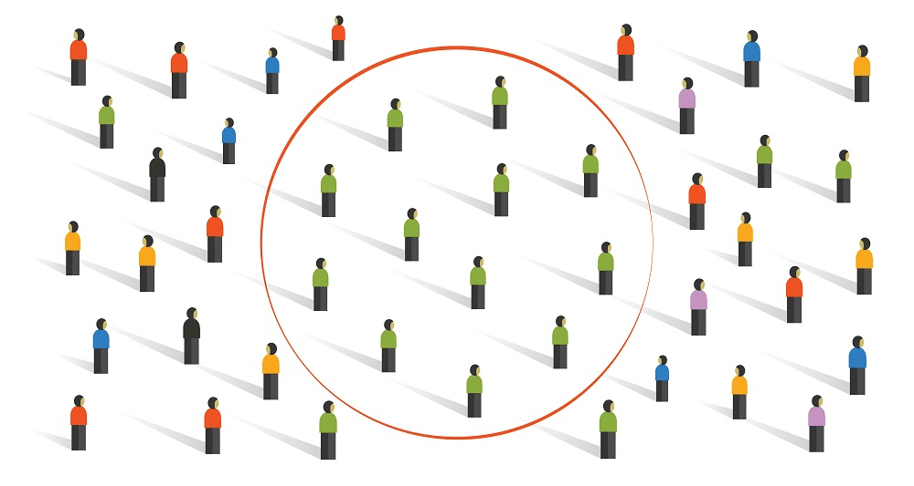
The ERC project HUNTING investigates the effect of micro-targeting in detail. The way politicians communicate with citizens has fundamentally changed. With the rapid growth of data-driven (microtargeting) techniques, political messages are increasingly matched to individual voters, in particular online. Many people fear that these data-driven techniques are a harmful phenomenon. They can invade privacy, exclude social groups, and depress turnout during elections. However, political targeting may, for instance, reach citizens who are difficult to reach via traditional campaigning, it can also provide relevant information on issues that individuals find important, and it can mobilise more people to vote, leading to increased inclusiveness and diversity. The ERC project HUNTING investigates the negative and positive effects of online data-driven targeting and digital persuasion in five countries. With the ERC team, the project will examine the conditions under which data-driven techniques affect citizens’ attitudes, opinions, and, eventually, voting behaviour. Sanne Kruikemeier is project leader.

Mobilization of dissatisfaction (VICI)
Politicians and political parties can respond in their communication to feelings of dissatisfaction that exist among parts of the population. This research shows how and to what extent political actors do this and what effect this communication strategy has on electoral support, political trust and polarisation on the one hand and on political decision-making processes on the other hand. Central is the notion of ‘discontent framing’, which consists of the use of populist communication, incivility and (accusations of the use of) disinformation. Those elements jointly capture a commonly used and coherent communicative repertoire. The project exists of different (PhD) sub-projects where we use content analyses, surveys and experiments to investigate the causes, content and consequences of discontent framing. The project is funded by a VICI grant of the Dutch science foundation (NWO) awarded to Rens Vliegenthart.

This project has received funding from the European Research Council (ERC) under the European Union’s Horizon 2020 research and innovation programme (Grant agreement No 949754)
Data-Driven Democracy Lab
Strategic Communication Group (COM)
Hollandseweg 1 (Building 201)
6706 KN Wageningen
The Netherlands
 Data-Driven Democracy Lab